
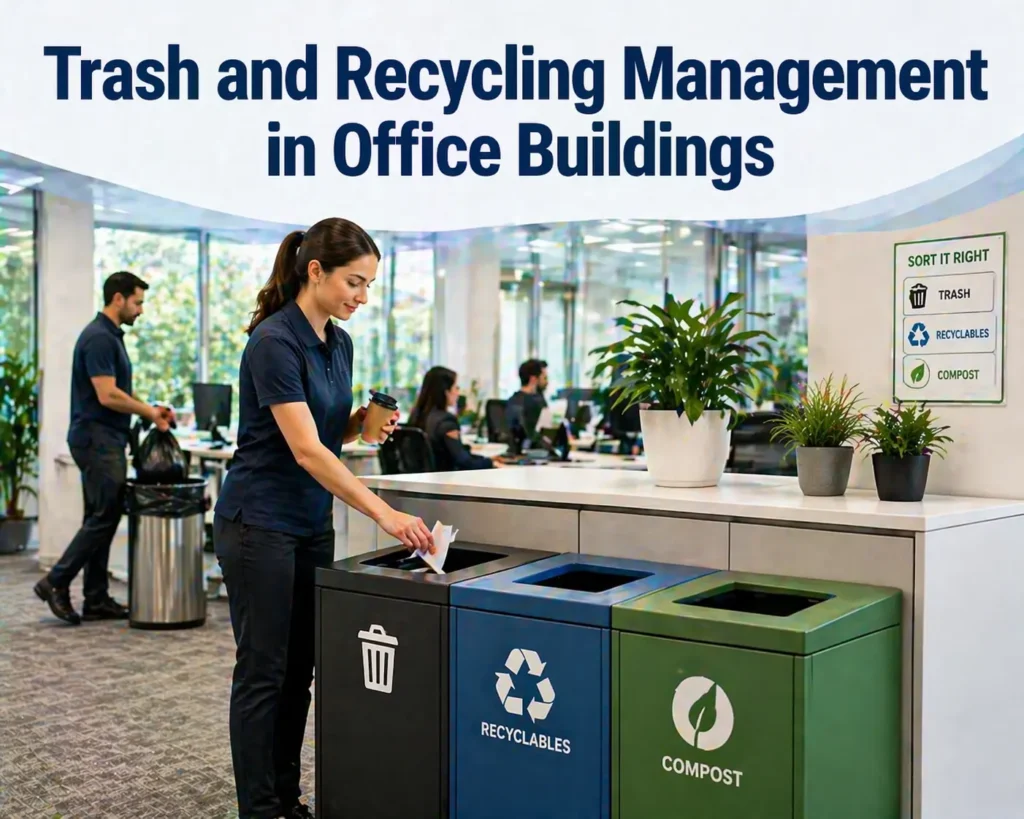
Trash and recycling management is a basic part of keeping an office clean and organized. Without a clear system, waste can build up quickly, causing odors, clutter, and an unprofessional appearance. A simple, well-planned approach helps keep your workspace clean, supports daily operations, and makes recycling easier for everyone.
Why Proper Waste Management Matters
Managing trash and recycling correctly has several benefits:
- Keeps the office clean and organized
Regular waste removal prevents clutter and mess. - Reduces odors and hygiene issues
Proper disposal helps maintain a fresher environment. - Supports recycling efforts
A clear system makes it easier to separate recyclable materials. - Improves overall workplace appearance
Clean waste areas reflect a well-managed office.
Types of Office Waste
Understanding what type of waste your office produces helps create a better system.
Common types include:
- Paper and cardboard
- Plastic bottles and packaging
- Food waste from break rooms
- General office waste
- Electronic waste (e-waste)
Each type may require different handling.
Setting Up an Effective Trash and Recycling System
A simple and clear system works best.
1. Use Clearly Labeled Bins
Place separate bins for trash and recycling. Use labels to make sorting easy for employees.
2. Place Bins in Key Areas
Common locations include:
- Workstations
- Break rooms and kitchens
- Conference rooms
- Hallways and shared spaces
Easy access encourages proper use.
3. Use Proper Liners
Use liners in all bins to make waste removal faster and cleaner.
4. Keep Bin Sizes Appropriate
High-traffic areas may need larger bins, while desks may use smaller ones.
Daily Waste Management Tasks
Regular maintenance keeps waste under control:
- Empty trash bins and replace liners
- Check recycling bins and remove contents
- Clean bin surfaces if needed
- Monitor high-traffic areas for overflow
- Keep waste areas neat and organized
Consistency is key.
Recycling Best Practices
- Avoid mixing trash with recyclables
- Rinse food containers when possible
- Flatten cardboard boxes to save space
- Follow local recycling guidelines
- Educate staff on proper sorting
A simple system works better than a complicated one.
Handling Special Waste
Some waste needs extra attention:
- E-waste: Dispose of electronics through proper recycling programs
- Confidential documents: Use secure shredding services
- Food waste: Remove regularly to prevent odors and pests
Proper handling keeps the office safe and compliant.
Common Mistakes to Avoid
- Mixing trash and recycling
- Overfilled bins
- Poor bin placement
- Lack of clear labels
- Irregular waste removal
Avoiding these issues improves efficiency.
Tips for Maintaining a Clean Waste Area
- Keep waste stations clean and organized
- Wipe down bins regularly
- Check for leaks or damaged liners
- Maintain proper ventilation in waste areas
- Schedule regular pickups
Conclusion
Trash and recycling management is an important part of office cleaning. With a clear system, proper placement of bins, and regular maintenance, you can keep your workplace clean, organized, and easy to manage.
Need Help Keeping Your Office Carpets Clean?
Maintaining clean carpets takes time and the right approach. Snip Clean provides professional commercial cleaning services in McKinney, TX to help keep your office clean, fresh, and well-maintained. Contact Snip Clean today to discuss your office cleaning needs and keep your workspace looking professional.