
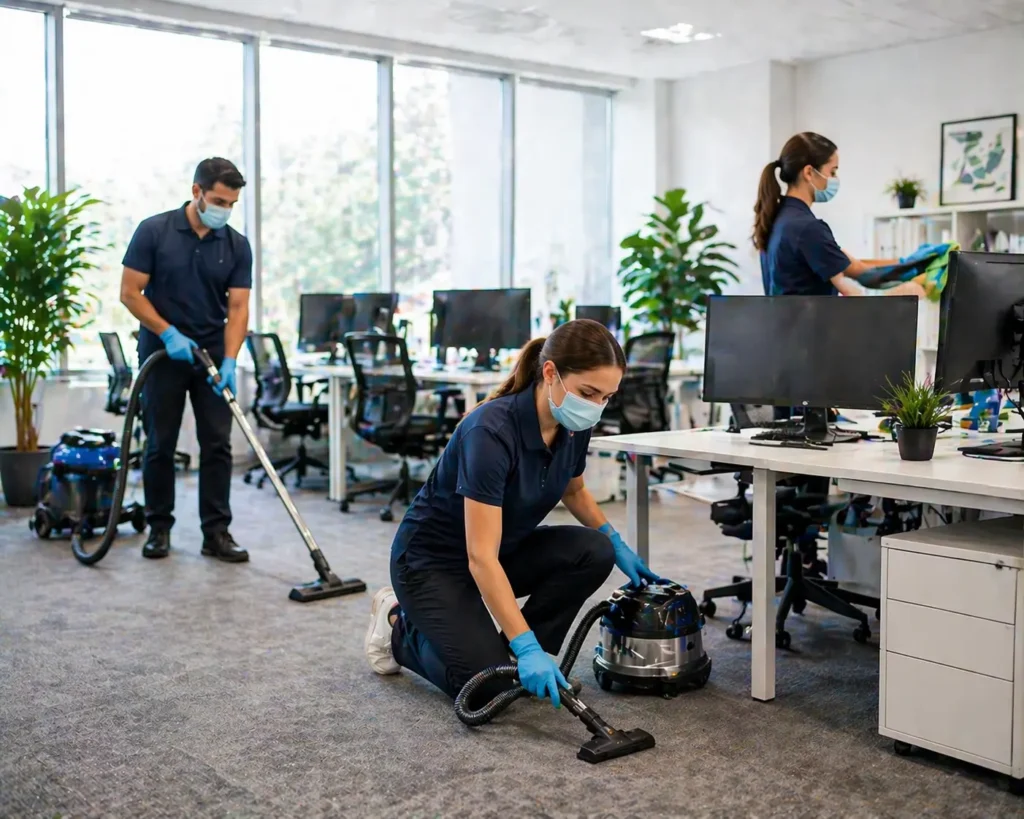
Allergies and asthma can make the workplace uncomfortable for many people. Dust, pollen, and other airborne particles often build up in office environments, especially in shared spaces. Proper cleaning helps reduce these triggers and creates a more comfortable and productive workspace.
Why Office Cleaning Matters for Allergies and Asthma
Office spaces can collect allergens over time. Without regular cleaning, these particles circulate through the air and settle on surfaces.
Key reasons to focus on allergy-friendly cleaning:
- Reduces airborne allergens
Dust, pollen, and particles can trigger symptoms. - Improves indoor air quality
Cleaner spaces support easier breathing. - Creates a more comfortable workplace
Employees can focus better in a cleaner environment. - Supports overall workplace health
Fewer irritants mean fewer discomfort issues during the workday.
Common Office Allergens
Understanding the sources of allergens helps target cleaning efforts.
Common triggers include:
- Dust and dust mites
- Pollen brought in from outside
- Mold and moisture buildup
- Pet dander from clothing
- Carpet and upholstery fibers
- Dirty air vents and filters
These allergens often collect in carpets, desks, vents, and shared spaces.
Key Areas That Need Attention
Some areas of the office collect more allergens than others:
- Carpets and rugs
- Upholstered chairs
- Air vents and HVAC systems
- Desks and workstations
- Break rooms and kitchens
- Curtains and blinds
Regular cleaning in these areas can significantly reduce allergen levels.
Best Cleaning Practices for Allergy-Friendly Offices
1. Use HEPA Vacuuming
Vacuum carpets and floors with a HEPA filter vacuum. This helps capture fine particles instead of releasing them back into the air.
2. Dust with Microfiber Cloths
Avoid dry dusting. Use damp microfiber cloths to trap dust instead of spreading it.
3. Clean Air Vents and Replace Filters
Air systems can circulate allergens. Clean vents regularly and replace filters to improve airflow and air quality.
4. Reduce Clutter
Clutter collects dust. Keeping desks and surfaces organized makes cleaning easier and more effective.
5. Clean Carpets and Upholstery Regularly
Deep cleaning carpets and fabric surfaces helps remove embedded allergens.
6. Control Moisture
Prevent mold by addressing leaks and maintaining proper ventilation in restrooms and kitchens.
Cleaning Frequency Recommendations
- Daily: Dust surfaces, empty trash, wipe high-touch areas
- Weekly: Vacuum carpets, clean upholstery, wipe vents
- Monthly: Deep clean carpets and shared spaces
- Seasonal: Check HVAC systems and replace filters
Consistent cleaning helps keep allergen levels low.
Additional Tips for a Healthier Office Environment
- Keep windows clean and reduce outdoor dust entry
- Encourage employees to keep desks tidy
- Use doormats to reduce dirt from outside
- Maintain proper indoor humidity levels
- Avoid strong chemical cleaners that may trigger reactions
Common Mistakes to Avoid
- Dry dusting surfaces
- Skipping carpet cleaning
- Ignoring air vents and filters
- Using harsh or heavily scented cleaning products
- Allowing clutter to build up
Avoiding these mistakes helps maintain a cleaner environment.
Conclusion
Office cleaning plays an important role in supporting employees with allergies and asthma. By focusing on dust control, air quality, and regular maintenance, you can create a workspace that feels cleaner and more comfortable for everyone.
Need Help Keeping Your Office Carpets Clean?
Maintaining clean carpets takes time and the right approach. Snip Clean provides professional commercial cleaning services in McKinney, TX to help keep your office clean, fresh, and well-maintained. Contact Snip Clean today to discuss your office cleaning needs and keep your workspace looking professional.